Skip to content

July 2013

I know that we have, on numerous occasions, reprinted the “Community Current Events” column that appeared in the Flaming Sword from 1916 on. The monthly column opens for us a different and interesting way of looking at life in the Unity. You can walk through the grounds of the Historic Site, but there is no one present. You can’t hear the ‘sounds’ of communal living. The noise from the kitchen, or the power plant.

Reading the “CCE” makes it all come alive somehow. With the traffic and the road construction on US-41, it is hard, sometimes, to picture what it really looked like and felt like 80 years ago. No air conditioning, little traffic on the dusty road. The country in the midst of the great depression. All these things are hard to imagine.

With that in mind, take a look at the August 1933 column, which described the events of July 1933 and picture yourself present.

ON SUNDAY, June 25, Mr. Steven Gotch of Osprey was a visitor here. He attended the Sunday evening services in the Art Hall and on Monday returned to Osprey. Sister Etta Silverfriend, Mrs. Edith Lueders, and Brothers Henry Silverfriend, Frank Wilson and David Richards motored to Tampa and St. Petersburg, June 27, returning the following evening. Miss Meta Monsees spent a week-end at the Unity, returning to Fort Myers Sunday night after religious services. Mr. W. Paul Phillips, a nurseryman of Orlando, was here collecting rare plants. He was greatly pleased with the many rare and beautiful specimens in the Unity gardens. Mrs. Fred McConnell and son Duane of Tampa arrived here on Saturday, July 1, remaining until the 4th. They were’ entertained with a beach party held at Bonita Beach. On the 4th, Mrs. Edith Lueders and Brother Henry Silverfriend accompanied Mr. and Mrs. George Hosmer to Fort Myers to the picnic on Sanibel Island. It was a large affair and was very much enjoyed by the many guests. Sister Adah Price and Miss Bertie Boomer left by bus for Chicago on the 5th to attend the World’s Fair. Sister Adah is visiting her sister, Mrs. A. M. White, who lives in Chicago. Brother George Hunt is assisting in the post office in Sister Adah’s absence. Brother John Grier is staying in Fort Myers at the home of his daughter, Mrs. Carlton Case, while she, Mr. Case, and the children are in Chicago attending the fair. Mr. Elmer Hough of Fort Myers was a dinner guest at the Unity on the 12th. Mrs. Edith Trebell, Mr. and Mrs. Charles Wetland, and Brother Claude Rahn motored to Oneco on the 12th. They obtained from Reasoner Brothers’ Nursery some rare fruit and nut plants and ornamental shrubs. Mr. John H. Davis, instructor of botany at Presbyterian College, Clinton, South Carolina, visited here on the 13th and inspected the Unity gardens. The sad news has been received from Baltimore of the death, after a long illness, of Mr. Henry N, Rahn.** father of Brothers Claude and Frank Rahn, in his seventy-fifth year. Mr. Rahn was a staunch Koreshan and earnestly endeavored to further the Cause in his native city of Baltimore since accepting Koreshanity in 1895. Meetings were frequently held at his house to discuss the doctrine; and whenever KORESH visited Baltimore he was a welcome guest .at the hospitable home of Mr. and Mrs. Rahn. Mr. Rahn is survived by his wife, five sons and a daughter. Brother Alien Andrews returned home on the 9th from the North, after attending the exposition in Chicago and visiting with relatives in Philadelphia and Washington, D. C. He also visited Niagara Falls, crossing to the Canadian side and viewing them from there. Brother Allen was very enthusiastic about his trip, having found it thoroughly enjoyable. Mrs. James Newcomb and daughter, Margaret, of LaBelle were visitors here on the 8th. Mrs. Newcomb was here again on the 14th. She has since left for Jacksonville for a short visit with her son, Edward Koester. From there she will go by steamer to New Jersey to spend the rest of the summer with another son, Julius Koester. Sisters Rose Gilbert and Vesta Newcomb and Brothers Allen Andrews and David Richards motored to LaBelle on the 16th to visit friends. Miss Genevieve Bisbing of Fort Myers spent several days here, arriving on Tuesday the 18th and returning on Sunday. Brother William McCready is not very well at this writing and is confined to his room. We hope that he will soon recover and be up and about again. Wade Stephens, son of Sister Cora Stephens, is in Tampa at present writing, visiting with relatives for two weeks. He expects-to see his brother Mace, who lives in Ocala, before his return. The Unity gardens are now bright with their summer beauty, after the refreshing rains.. Flowers are in bloom all over the place, presenting a gorgeous spectacle. The brilliantly colored hibiscus blossoms are particularly attractive. Mr. and Mrs. Frank S. Lewis of Everglades have visited us several times during the past month. Mrs. Edith Lueders spent the week-end with Miss Lydia Pierce in Fort Myers. Mrs. John C. Home spent two days at the Unity after visiting for two weeks in Tampa. Sister Emily Bessemer was the over-night guest of Miss Lydia Pierce. Brothers Theodore Naeselius and Claude Rahn made a trip to Everglades with the truck on the 26th, taking with them some Cajeput trees and beautiful crotons which will be used for town beautification purposes. The Unity nurseries are becoming well known for their splendid collection of exotic and native plants. We were pleased to have visit us Mrs. Lovelle Ahrano and son Mark, who motored here from Tampa on the 26th. They returned the following day. The visit was much too brief, but we hope to see them again soon. Brother Daniel McNamara has been busily engaged in doing some extensive gardening, preparing ground for fall planting. With Brother Mac on the job, we have good reason to expect an abundance of fresh garden vegetables this winter.

Mention is made in the article of the death of Henry N. Rahn in July of 1933. According to the information we have, Henry Rahn and his wife had five sons and a daughter. We know of four of the sons and the daughter. A search found that Henry Rahn was buried in his hometown of Baltimore, in a suburb called “Brooklyn Park” Here is a listing of the graves under the name of Rahn…

Rahn, Arthur L., b. 1884, d. 1884, [MG]
Rahn, Ella Ida Jane Yingling “Jennie”, b. 10 Jan 1862, d. 15 Jun 1945, [MG]
Rahn, Frank Raymond Holbrook, b. 23 May 1893, d. 20 Dec 1936, [MG]
Rahn, Henry Nicholas, b. 20 Aug 1858, d. 11 Jul 1933, [MG]
Rahn, Russell E., b. 1889, d. 1890, [MG]
Rahn, Viola E., b. 1882, d. 1883, [MG]

—————————————————————–
Oddities:

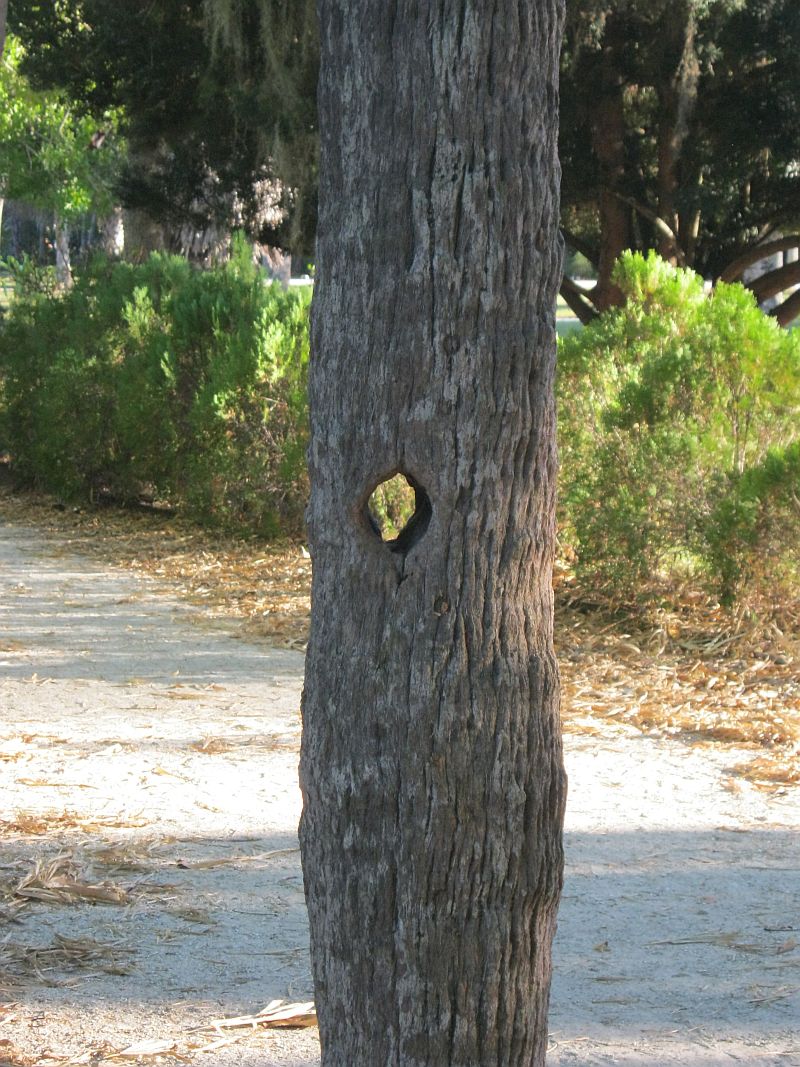
There are a lot of interesting things to look at inside the Historic Site Settlement.  Some things appear to be a little “odd” Here’s one of them:

This tree, with a hole through it, sits along the Estero River, near Bamboo Landing.  The "Legend" says that Gustave Damkohler tied his boat up to this tree.  Old wives tale?  Click To Enlarge...

This tree, with a hole through it, sits along the Estero River, near Bamboo Landing. The “Legend” says that Gustave Damkohler tied his boat up to this tree. Old wives tale? Click To Enlarge…

Click to enlarge…

Categories: Monthly Feature.

Tags: , , , , , , , ,

June 2013 – Lazy days of summer…

As the rainy season sets in, here is how community events were described in June of 1936 – 77 years ago.

From the “Community Current Events” column – The Flaming Sword, June 1936

AFTER a visit of several months at the Unity, Leroy H. Bubbett left by train for his home in Chicago, much improved in health. A dry spell lasting several months left the surrounding woods in a condition to be easily devastated by fire. For weeks now the night sky has been illuminated by these woods fires. Sister Emily Bessemer, whom we all admired for the excellent work she did as one of our two cooks, left on May 8, to visit with relatives in Washington, D. C., for the summer. Sister Ida Fischer remains as our stand-by as chief cook. Political activity is the order of the day, the primary election for candidates to office in the state and counties being held on June 2. There are fourteen candidates in the race for governor of the state of Florida, which is a record and makes for a pretty hot contest. Mrs. Eleanore Castle, and granddaughter, Dawn, arrived from Chicago, Illinois, May 8, to make their home in Estero, where Mrs. Castle has purchased a home. She and Dawn are welcome additions to the community, and she should find many friends of former years to make her residence here a pleasant one. Brother David Richards left on May 12, for a visit of several weeks with friends in Miami. He was accompanied by Harold Thomas, of Sussex, England, who has been spending the winter at Bonita Springs and is returning to England. It is. with a real sense of loss that we record the passing of Brother Peter Blem, aged 56, on May 12. He had been suffering for some time with a chronic disorder of the digestive tract and put up a brave fight to correct it. It proved to be a losing fight, however. Brother Peter had been a member of the Unity since May, 1913, coming here from California. He was well liked by all who knew him and was unsparing in his work for the community. Brother Peter is survived by a sister in Denmark. He did some creditable work as an artist, as his pictures testify. He joins the host, of those good and faithful followers of KORESH whose names will not be forgotten so soon. Recent visitors were Mrs. A. L. Camphausen and Miss Elin Lindberg, of Fort Myers, Mr. and Mrs. Victor Phillips and daughter, Marie, of Miami; Mrs. James Newcomb and daughter, Olive, of LaBelle; Robert and Lloyd Graham and Dr. and Mrs. Samuel Graham, of Miami; Mrs. Jean Ahrano, of Tampa, and Mrs. and Mrs. Fritz Ahrano and daughter, of Pensacola. Brother Claude Rahn, accompanied by Brother Laurence Bubbett, left for Miami on May 15, where he was to board the train for Baltimore to visit with his mother and relatives for the summer. Brother Laurence Bubbett will remain in Miami for several months to visit with friends there.

Categories: Monthly Feature.

Time Marches On…

Cyrus Teed once said that some day Estero will be home to 10 million people. He may have been right, but they aren’t Koreshans…

Time Magazine and Google have partnered to take millions of photographs from the Landsat satellite, animate them and show a timeline from 1984 up to 2012.

Here is how the Estero area looks. You can see tremendous growth, including FGCU showing up out of nowhere. You can see Coconut Point Mall coming forth from what was once called “Sweetwater Ranch”. Closer to home, watch “Pelican Sound” grow and look at the area just east of Estero Bay and wonder what effect that has on the eco system. It is fascinating. The video cycles through three times. Try it yourself at: Timelapse


Categories: Posting.

Tags: , , , ,

Another View (continued) – May 2013

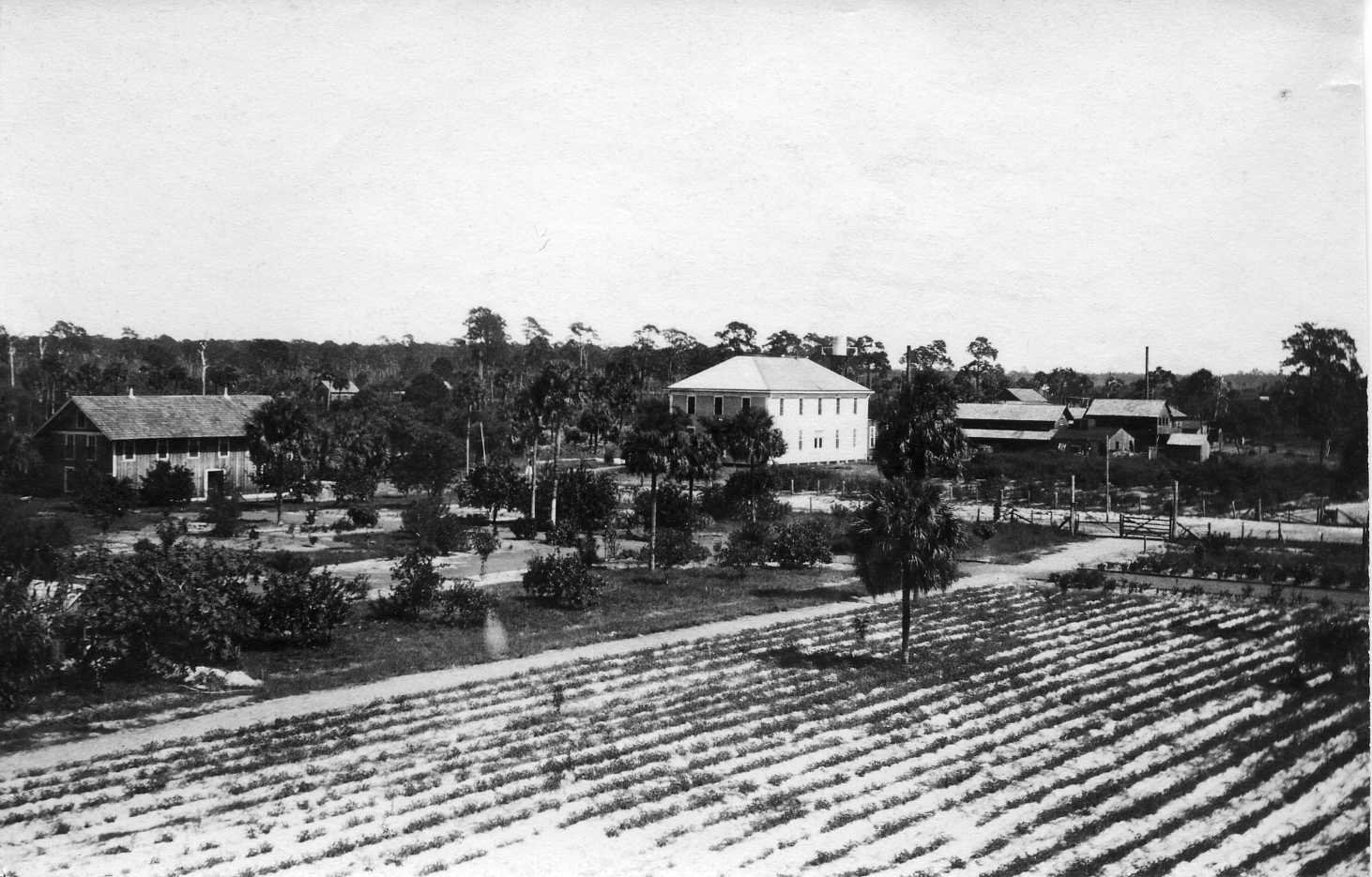
In our last post we showed a panoramic view of the Unity grounds, as taken from the Printing House, located on the southeast corner of what is now US-41 and the Estero River. In this post we would like to show you a few more “new” views of the Unity which were recently donated. It is always exciting, from an archival point of view, to see something like this — a ‘new’ view.

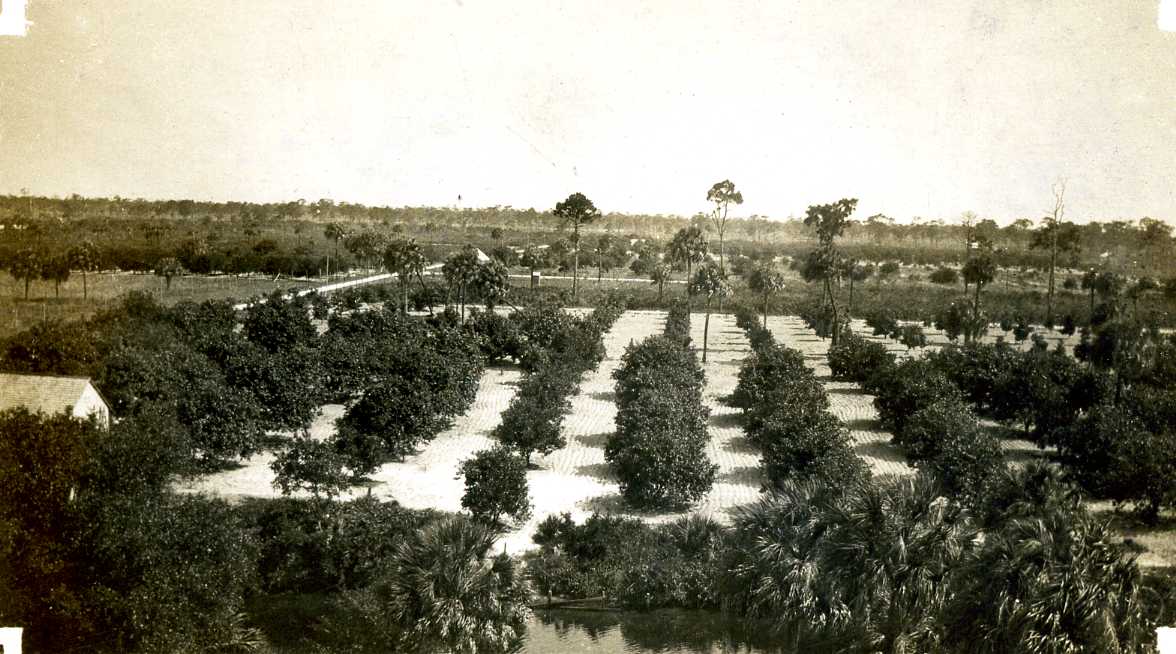
The first is a picture of an orange grove – supposedly belonging to the Koreshans.

Orange Grove

Orange Grove

The location is not given on the photo, but it appears to be opposite the Printing House, just north of the Estero River. It is known that there was a grove located there at one time. We are in possession of a post card showing what was called the Orange Grove Court, a “motel” from the 1940’s or 1950’s on that same plot. We can only assume that this is perhaps and earlier view of the same grove.

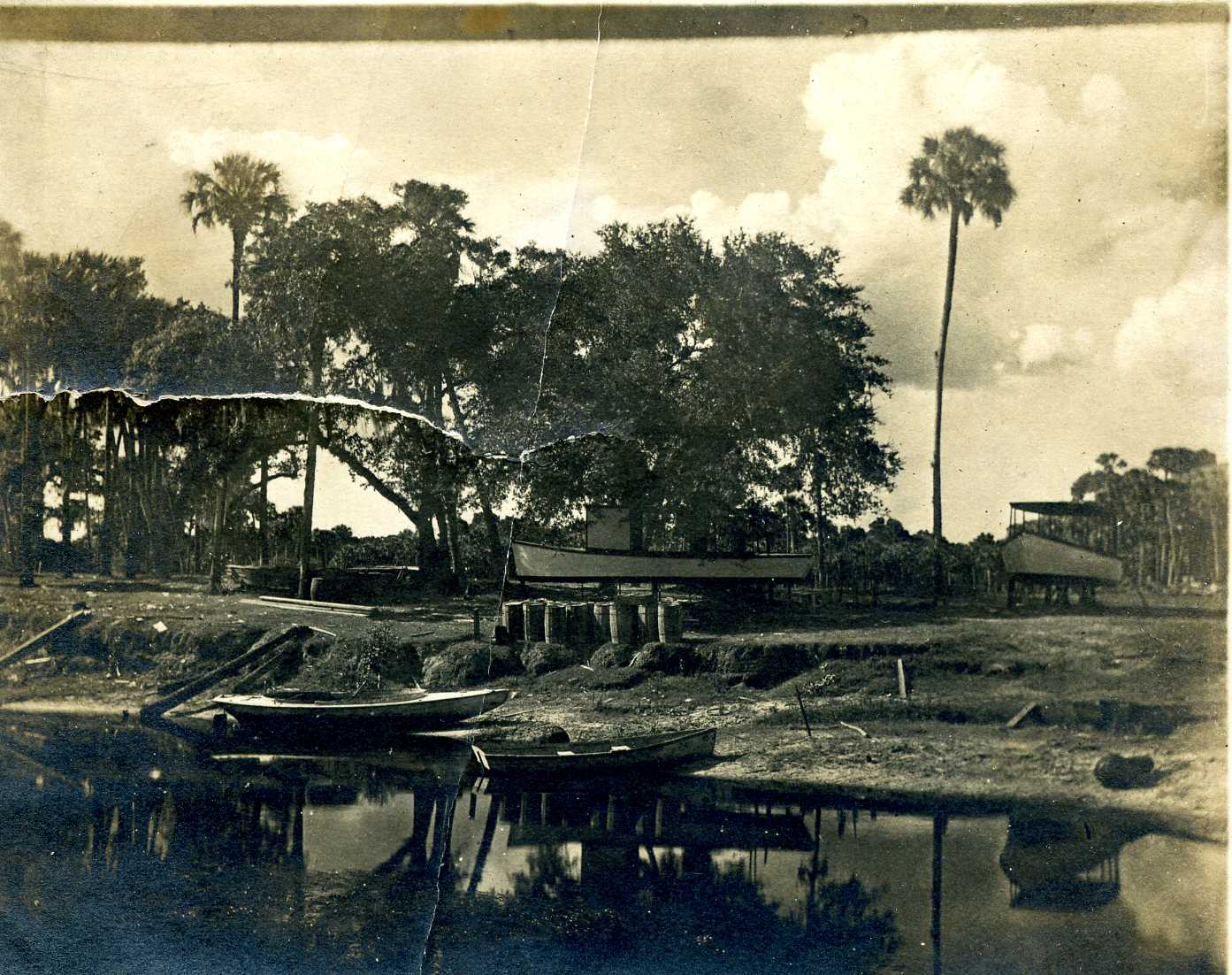
A second photo is what appears to be the Koreshan Boat works, or at least nearby:

Boat Works

Boat Works ??

The boat works were located along the south side of the river, just east of the Printing House. It is only speculation that this photo is of the Koreshan boat works since this photo, or anything like it, has never been seen before.

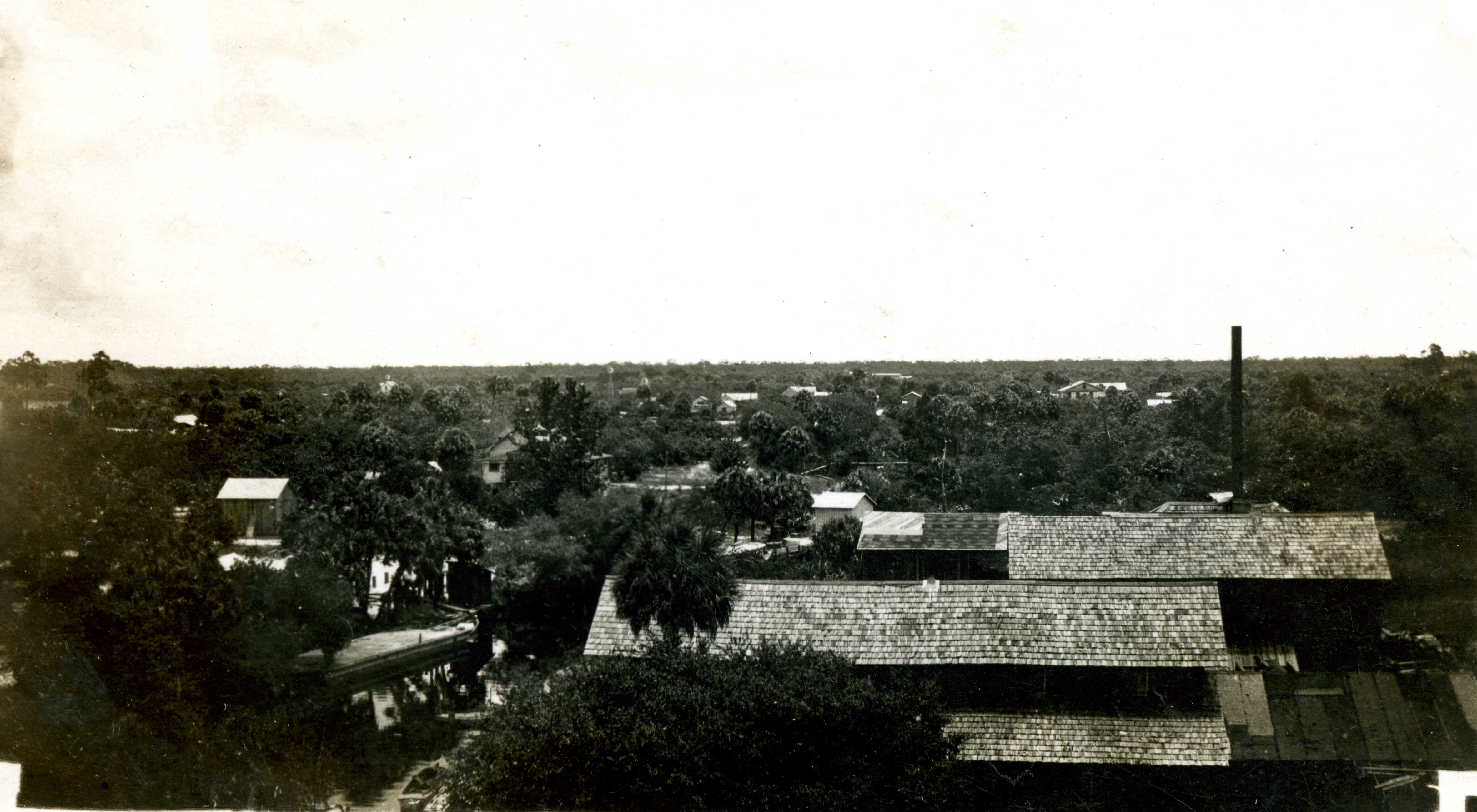
The last photo shows the boat works building and the sawmill as seen from the Printing House. First, take a look at a photo that has been in the collection for some time. This shows the printing house, the boat works and sawmill. This was taken from the Dining Hall. Notice the “Old Store” to the left and the location of what is now US-41.

Printing House as seen from the Dining Hall

Printing House as seen from the Dining Hall

Now compare the photo above with this one:

Boat Works and Saw Mill roof as seen from the Publishing House.

Boat Works and Saw Mill roof as seen from the Publishing House.

You can see the roof of the buildings — the boat works as well as the sawmill — along with what appears to be a smokestack. That smokestack would be the boiler, used to supply steam to the boat works and the sawmill. See the Community Current Events from 1916. This is a view never seen before.

What is even more impressive is this view,is a vew looking east along the Estero River that to my knowledge has also never been seen before, showing a large number of homes and buildings in the distance. (Click on any of the photos for an enlarged version).

Categories: Monthly Feature.

Tags: , , ,

Another View

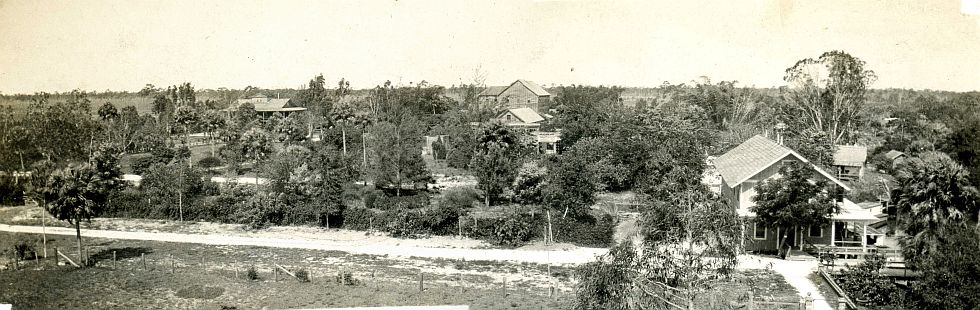
We are always happy to receive donations for the archives. We recently received an envelope containing some pictures and clippings from the granddaughter of Edward Albert Wilhelm Koester Two of the photos showed a view, (taken from the Printing House, which was located on the southeast corner of the intersection of the Estero River and what is now US-41).

The two photos look like they were taken one after the other, so through the ‘miracle’ of modern technology we were able to create a panorama. Here is the photo. click on it to get the full view and effect.

The Koreshan Unity

The Koreshan Unity

The date that the photo was taken is unknown, however, as you can see the “New” Store is not there, and the road is nothing more than a path. There does appear to be an identical photo, albeit not a panorama, in the Reeves Study. It says the photo was taken about 1906.

Notice that behind the store you can see that Damkohler house with a set of steps going down to the river. Beyond that another small building along the Estero River. To the left of the Store is seen the Founder’s Home, with the old surrounding porch and behind it the Dining Hall. On the far left is the Planetary Court.

Categories: Posting.

Tags: , , ,

April 2013 – Tamiami Trailblazers

Reprint of American Eagle

Reprint of American Eagle
Click for full PDF


April marks the 90th anniversary of the automotive trek across Florida’s Everglades, known as the Tamiami Trailblazers. This group of men, which included four Koreshans — Alfred Christiansen, Frank Lewis, Charles Hunt and Allen Andrews. Frank Lewis kept a diary of sorts. This included a day by day account of the trip.
In 1973, during the 50th anniversary of the crossing, the American Eagle reprinted the April 26, 1928 issue of the newspaper which celebrated the opening of the road. The trip by the Trailblazers was made during the month of April, 1923.

The idea of building a road across the Everglades had been discussed for a long time as part of the overall Tamiami Trail project. At the time, the only cross-Florida road was from Tampa to Daytona Beach. The building of a South Florida highway would certainly help the growth of the area, but when the project encountered delays due to financial problems, many supporters of the road decided to publicize the project by driving across the Everglades in a caravan of Fords. The group thought it would only take a few days, but it took 23 days.

The “Trailblazers” arrived in Miami on April 21, 1923. It should be noted that when the group returned to the west coast of Florida, they returned via Fort Pierce and LaBelle. The trip across Florida totaled about 163 miles. The Florida Historical Quarterly published a good article in 1971 describing the entire event.

Categories: Monthly Feature.

Tags: , , , , ,

March 2013

From the Koreshan Archives:

 —  This month, we want to let you know of a valuable new addition to the archives. It isn’t an “original” document, but a photocopy taken from microfilm. The Clerk of Courts in Lee County was about to dispose of some old microfilm and it so happens that this reel contained documents relating to the suit that Gustave Damkohler filed against the Koreshans in his attempt to have his land returned to him. We first heard about this from the friend of the archives, FGCU Professor Lyn Milner. The folks at the Clerk’s office were kind enough to donate the photocopies.

 —  After donating his land to the Koreshans, Damkohler obviously had a change of heart. In his suit he said he had been mislead by the Koreshans. They eventually settled the suit. The document is 237 pages and is sometimes difficult to read. You will find it in the archives exhibit

The Archives of the Koreshan Unity (excepting the small collection here at the Park) are now housed in the State Archives in Tallahassee. They are being processed and although there is much to be done, they have made great progress. The Florida Memory Project has an exhibit for the Koreshan Unity Collection. Worth reading and seeing online.

Last, but not least, we want to (once again) direct you to some of the archival holding of the New York Times, with regard to the Koreshans. The Times articles concering the Koreshans can be found by going to our Special Page.

Categories: Monthly Feature.

Construction

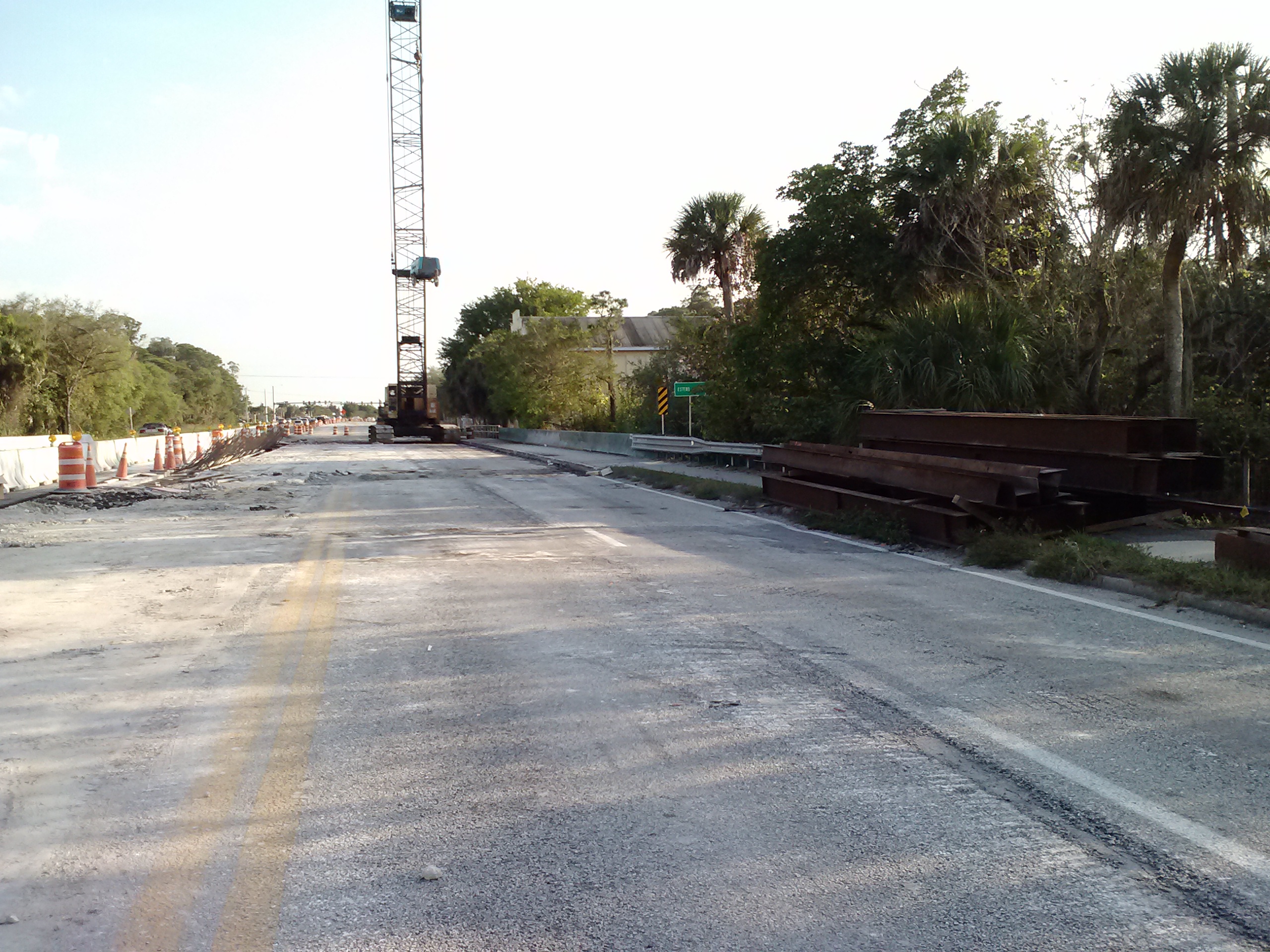
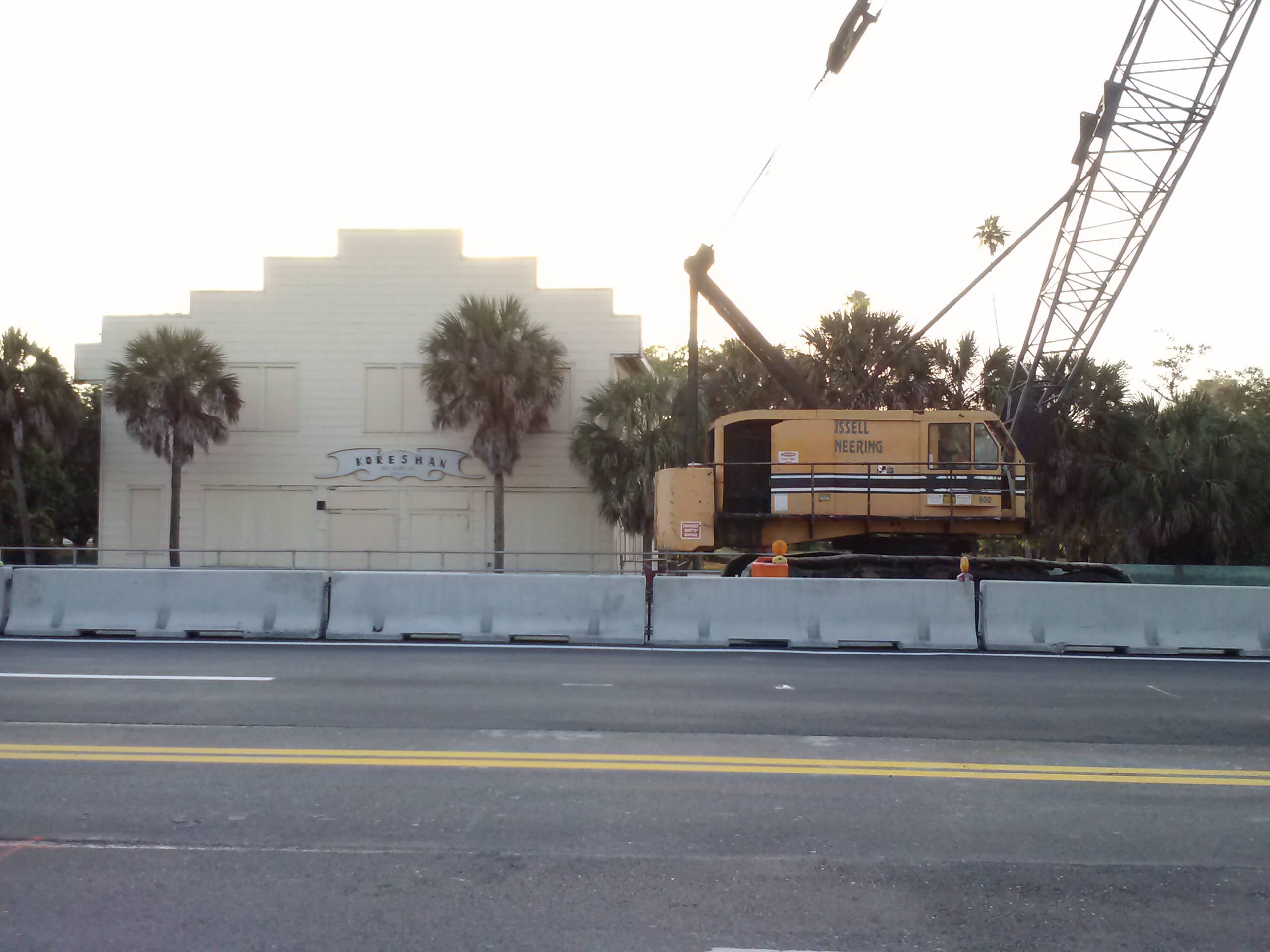
We have featured, in the past, articles about the road construction on US-41, in December 2011 and again in January 2012.

Under Construction

The modern day equivalent of the saga of US-41 continues. The highway that runs in front of the Historic Site has seen a lot of change over the years. From a dirt path, to a two lane highway, a four lane highway and now a six lane highway. The Koreshan Unity lobbied hard for the four laning, despite the presence of the “Historic District”. I doubt that the highways will ever get any bigger than six lanes unless the east side of the highway and all that property, including the present day “College of Life” building are all removed.

The American Eagle, in October 1990 featured an article about the Tamiami Trail Blazers, which included four Koreshans among their ranks. Here is the article:

Construction of Tamiami Trail
Cost Millions in the ’20s;
Put South Florida on the Map
by Sue Roper

The historic Tamiami Trail runs between the Koreshan State Historic Site and the Koreshan Library/Museum at Estero. Most Florida tourists and new residents call it U.S. 41 and in Fort Myers, it’s Cleveland Avenue.
The only U.S. highway between Tampa on Florida’s west coast and Miami on the east coast,

US-41 Today

is best known as U.S. 41, but long-time Floridians call it “The Trail.” It is one of the State’s most important highways and opened up south Florida to thousands of new residents and the tourist industry. Many Florida visitors by-pass it for 1-75, a few miles to the east, to reach “Alligator Alley,” a stark road that cuts a straight path across the Everglades from Naples to Dade County.

Trail Touches Base.
The Trail meanders near the coast from Tampa through busy Bradenton, Sarasota, Punta Gorda — rails end when the Koreshans came to Estero in -1894 — Fort Myers and Naples where it turns sharply east on its way to Miami. Near its final destination the Trail makes a wide bend because, according to legend, it was built from Naples east and Miami west, and the two ends would have bypassed each other. First talked about in 1915 by a Captain J.F. Jaudon of Miami, president of the Chevelier Corporation, owner of vast acreage in northern Monroe County, the road was delayed by World War One.

No Survey Here
Jaudon had proposed a road across the trackless Everglades — haunt of Indians, Bald Eagles, panthers, bears and exotic birds. The thought stirred the imagination — the idea of driving a car where only

The 'New' Store

Indians and U.S. soldiers in the Seminole Wars had trod was a contemporary version of “Wagons, Ho!” Politics and wealthy individuals such as Barron Collier (for whom Collier County is named) entered the picture with visions of cash registers ringing in” their heads. But it wasn’t until April 4, 1923 that a cavalcade of ten cars (nine were Fords) left Estero on their epic journey across the ‘Glades.

Trail Blazers
They called themselves “The Trail Blazers” because the proposed road had been termed the Tamiami Trail since 1917. The adventurers ranged from 15 to 65 years of age and em-ployed two Seminole Indian guides to lead them across the wild Everglades. They started from Tampa and their arrival in Fort Myers on April 3 was duly celebrated. William R. Spear, editor emeritus of The Fort Myers News-Press, was at the time a young reporter for the Fort Myers Tropical News (an early local newspaper) and covered the gala event.

Koreshans Made Trek
On April 4, they picked up four men at Estero. They were: Koreshans Frank S. Lewis

Looking North

(the only Trail Blazer to keep a daily record of their cross-the-Ever-glades odessy), Alfred Christensen, Charles Hunt and Allen Andrews, editor of The American Eagle, the Koreshan newspaper. Lewis and his wife, Anna, later retired to the little white bungalow just north of the Koreshan Library/Museum. Their harrowing journey took much longerthan anticipated, ending April 21 in Miami. The Trail Blazers proved an apt name — although they encountered none of the hazards of the wagon trains crossing the waterless plains and rugged mountains to colonize the American West.

Mud, Bugs and Heat
What they faced, according to Lewis’ diary, published in the April 22 Miami Herald, was mud and mire, fire, heat and bugs, cypress swamps and rough palmetto prairies. They became lost and were reduced to searching for pot- able water and hunting wild game. A survey crew from a lumber camp rescued them and brought supplies and large cans of gasoline. By this time, the trek had attracted the national news media, and later in their trip, a plane sent by the Miami Chamber of Commerce dropped welcome bread and canned goods to the hungry pioneers.

The Miami Herald Reports
But they drove on, braving the swamps and heavy marl until they reached the Miami end of the grade. Finally, according to Miami Herald files, “seven muddy Model T’s chugged down Flagler Street (a major city street) to a reception at the waterfront park. They were singing their theme song to the tune of “Tipperary” — beloved of the British Tommy — but with these words:

Estero River Bridge


‘”Tis a long way to Miami
It’s a long way to go.
It’s a long way to Miami, o’er a trail we did not know.
Goodbye Fort Myers, Estero and
Naples, too.
‘Tis a long way to Miami,
But we went right through!”

Garden Club Celebration
In 1982 Periwinkle Garden Club, Fort Myers, re-enacted a portion of the local celebration. Antique cars paraded down the Trail from the Fort Myers Historical Museum (in the old downtown railroad station) to the just-opened Bell Tower Mall at Daniels Road, access to 1-75 from the Tamiami Trail. The club dedicated a large, elevated historical marker in the presence of Grover Hackney of Tampa — the last surviving “Trail Blazer” and grand marshall of the parade. A host of local and state dignitaries and garden club officials from Miami and Tampa were special guests. A congratulatory telegram from President and Mrs. Ronald Reagan was read. At the gala reception which followed, Hackney told many a tale and sang the Trail Blazer song for the invited guests.

62 Years Ago
Spear, who spoke during the ceremonies, said, “It is difficult today (1982) to conceive that as late as 1920 well within the lifetime of older inhabitants, there was no road from Punta Gorda to Fort Myers or to Naples and Miami. The Trail, as we know it today, was literally blasted from the floor of the Everglades with 20-tons of explosives at an estimated cost of $13 million in 1920 dollars.

Two Miles A Month
According to Spear, who was assigned to cover the early construction of the Trail: “Road building in the ‘Glades re-quired drilling holes for dynamite in the solid underlying rock; loading and setting the blast; dredging up the loosened rock to form a grade; then leveling, scarifying and paving this grade. The maximum rate of progress was two miles per month. One of the “walking dredges” used in the Trail’s construction is at the Collier-Seminole State Park just east of Naples. A Park Ranger who has studied the building of this road has a talk with some very interesting old slides which he showed at a Monday Morning Conversation at the Koreshan Library/ Museum recently.

No one is singing here today. We are waiting for this latest construction to finally end.

Categories: Posting.

February 2013

List of Supplies

“THE PLANT HAS BLOSSOMED!”
Thus began the “Community Current Events” column in the December 1925 issue of the Flaming Sword, the monthly journal of the Koreshan Unity. What were they talking about? Perhaps the entry of the Unity into the 20th century, the opening of the “electric light plant” which provided electric light for many of the buildings in the settlement. The Archives has a photocopy of a list of ‘supplies’ that were purchased before and after the opening of the electric plant. You can view this by clicking on the image at the right.

Here is the way it was described:

THE PLANT HAS BLOSSOMED!
WE HAVE HAD occasions in times past to refer to the progress made in the construction of our new electric light plant, but with this issue of THE SWORD we have the pleasure to announce that the plant is now an accomplished fact, and that the eighty horsepower Fairbanks-Morse engine is giving complete satisfaction. The fifty kilowatt Westinghouse generator is giving all the electric power we need.
We hoped to have the plant in operation by the Eighteenth of October, but the representative of the Fairbanks-Morse Company could not be here until later. It then required the better part of a week to get the proper alignment and the final engine adjustments, but by October 25 all was ready. It was a thrilling sight to see this massive piece of machinery start for the first time. The Unity has waited long to complete this plant, and now we have something that should prove to be of great satisfaction.
The impetus to our new power plant was first given by Messrs. Peter Campbell and Claude Rahn; but our remarks would be incomplete did we fail to mention the fact that Brother Allen Andrews has been the prime factor in pushing it to its completion. He has consummated a number of successful real estate sales, the proceeds from which he has devoted to the lighting plant. Brother Stephen Chislett, our master mechanic, with Brothers Theodore Naeselius and William Fischer did a fine job on the concrete foundation, and Brother Alfred Christensen did everything possible to push the work from the beginning
The dining hall and Art Hall have been supplied with electric lights for several years, but our new store was handicapped for the lack of them. Now, however, with its dome lights, the store is as bright as day. We also have several large street lights on the county road, extending from the bridge over Estero River to the Art Hall, which adds considerable cheer to the surroundings.
It is a great comfort to our people to have electric lights in their rooms after using oil lamps so many years. The dormitory, with its three stories lighted up at night, is a sight worth while to those who have been accustomed so many years to the darkness. Brother Alfred is also placing various lights in the park.
Work is now being pushed in providing electricity for the Estero Inn and the residences of neighbors who desire it. Motors have been ordered for use in the various departments of the Unity, and when these are installed we can then dispense with. the many small units now in operation.

Categories: Monthly Feature.

January 2013

So much of what we have in the archives deals with life in the Koreshan Unity as it happened here in Estero. After the death of Dr. Teed in 1908, many members of the unity began to roam a bit. This is not to say they left the Unity for good, but they either traveled, or in some cases, lived somewhere else while retaining some means of identification with the Unity. With the dawn of the 20th century, people everywhere began to travel more and move.

One member who did that was Laurence Wilmer Bubbett, (known as “Laurie”). He was President of the Unity for some time, beginning in 1949 when Allen Andrews was “expelled” from the Unity. Laurie, whose parents, James and Evelyn entered the Unity in Chicago in the early days, really knew nothing else, but the notion of community living here in Estero. That being said, even a lifelong member like Laurie Bubbett, moved about a bit after 1908.

Laurie lived in New York City from 1915-1918 as well as Baltimore and Miami, always making a living as a printer and a musician. He is said to have been a gifted violin player. It isn’t clear if he evangelized on behalf of the Koreshans.

After a time, he returned to the Unity. One of his closest friends was his brother-in-law, Claude Rahn, another lifelong Koreshan who also moved away while remaining a member. Claude had been married to Laurie’s sister, Imogene who died in 1932. Claude lived in New Jersey and Laurie lived here. They corresponded and we have some of their letters, most of which were “chitty-chat” where Claude thanks Laurie for the gift of oranges at Christmas, etc.

The most interesting things in what we call the “Laurie Bubbett Material” collection (Beginning with item AM-0113) are two notebooks. The first, is an expense journal, or ‘daybook’ that Laurie kept, beginning in 1933. He begins saying:

“Expenditures in cash form Mother and self, beginning December 1, 1933, Estero, Fla. Mother (Mrs Evelyn Bubbett) receives a widow’s pension of $36.00 a month from the government. It had been $40 but was recently reduced 10%.”

Laurie lists each expense and when one looks at the prices of goods and services, it makes you realize just how much prices have risen over the past 80 years. Laurie bought 2 gallons of gasoline and paid 41 cents. By the end of 1934, when he quit making entries, he used much less detail and had entries for various items such as “candy 5 cents” and “milk, 35 cents”.

It is always interesting to see how prices have changed over the years. This expense journal is a peek at what life, albeit a “Koreshan” life, was like in the midst of the 1930’s.

Categories: Monthly Feature.