Skip to content

Koreshan Photographs, Articles and Clippings

In case you hadn’t noticed… There has been a lot of activity of late with regard to the Koreshans. First some printed articles. In the November issue of Gulfshore Life Magazine, our friend Lyn Millner had an article entitled Koreshans-The Legacy and the Questions The magazine’s online edition does not include the article, but you can see it by clicking on the title on this page.

The second article, by Amy Bennett Williams of the Fort Myers News-Press, is called College of Life Foundation Changing Direction. It includes a Koreshan “time line” as well as a well written article linked to the timeline.

Not to be out done, the State Archives of Florida which now houses the Koreshan Unity Archives, thanks to the gift of the “College of Life” (originally the K.U.) back in 2009, finally received a grant to begin processing the archive. The two State Archvists who are processing the material, Beth Golding and Bethanie Yetso, have been writing about the experience on the Florida Memory Blog (The link will give you all eight of the articles thus far). In addition, the State Archives already has over 600 photos digitized and online. They can be seen on that same Florida Memory website. You can save yourself some time and searching by simply clicking Here for a listing of the photos answering to a search for “Koreshan”.

Categories: Posting.

December 2012

Over the past couple of months we’ve looked at the “other” side of the Koreshans and the factions that sprung up after the death of Dr. Teed. This month we want to take a look, not so much at the factions, but at life inside the Unity. That is, life as it was “really” lived. No doubt most of the Koreshans got along and lived, as best they could, within the framework of a community. We know for a fact that even some of the most stalwart members had “issues” with the rules and the beliefs. Some of that stemmed from the fact that a community required community rules which didn’t always meet the desires of individuals.

One such example is the Acuff family. They were living in Texas when the head of the family, William, reportedly read a Chicago newspaper and saw an ad for the Koreshans ((1)). The Acuff family pulled up stakes and headed for Florida. In her paper for the Historical Society, Coleene Huddlestun writes:

…..”William Sylvanus Acuff and his wife Mary Magdalene Talley Acuff had a homestead on the Texas plains near a place called Albin. They had two daughters and four sons then. Their closest neighbors were miles away. It was a lonely life, but they were together.

In a paper from Chicago, William Acuff, my grandfather, read about a utopian community being established in Florida. He wrote for more literature. He was convinced it would be good for him and his family–a better way of life. I do not know how much he believed in the teachings of Koresh–Cyrus Teed. They sold their homestead and stock, outfitted a covered wagon, and left Texas with as many belongings as they could put in the wagon with the six children, ranging in age from about twelve or thirteen years old to about two or three years old. Their wagon was pulled by a team of oxen, and they had two milk cows attached to the rear of the wagon. My father told me these things. He was their oldest son.

When they reached New Orleans, they sold the wagon, oxen, and cows and boarded a boat that sailed them as far as Tampa, Florida.

The Koreshan Unity had sent a boat to Tampa to get them and other families who were joining the community. They reached Estero in the fall of 1898 or 1899*. They had had a long, rough trip. When they reached the Koreshan community, any money and possessions that they had was turned over to the community. The family was divided–the men to the men’s house and the women to the women’s house. The children were separated from their parents, and the boys were separated from the girls. The houses were rather primitive, and they needed more buildings. The houses had no screens or ceilings, and the insects were very bad. The roofs were thatched with palm and palmetto fronds.

My Grandmother Acuff’s last child was born about six or seven months after they reached Estero. We believe that was in the summer of 1899 or 1900. (The Social Security Death Index says Arthur was born in July 1901) ((2))

She’s goes on to recount how the rules of the community separated husbands and wives and children. Apparently this did not sit well with Mrs. Acuff who begged her husband to leave. Apparently, she did leave, and worked as a cook in a Fort Myers restaurant, taking her youngest son with her. While she worked, he was there, in a box. When he was old enough to walk, she had to take him back to the Unity. She continued to ask her husband to leave until she finally divorced him. She met and married a deputy sheriff and eventually moved back to Texas. You can read her granddaughter’s paper by going here.

On the Koreshan side of the matter, we find this quote in the McCready-Vesta Newcomb book Folks We Knew in the K.U.

“The Acuffs came from Texas shortly before the birth of Arthur, who was born in the thatched cottage on the river bank. Mollie, who had apparently been something of a beauty in her younger days, abandoned the family, including Arthur, and left before long. Maude was one of those who died during the typhoid epidemic.”

So, which is it? Did she abandon her family? The point I want to make is that there are always two sides to a story and the existence of papers showing some “behind the scenes” things that put the Unity, and some of its followers, in a less that favorable light, is important to recognize in any historical assessment of the Koreshans.

One other incident with regard to the Acuff family involves Elbert, son of William Acuff who apparently attempted to run away fro the Unity. This is from the Fort Myers Press in 1908:

“This week K. B. Harvey, who runs a line of steamers between this city and Sanibel, had a peculiar experience according to his account which is as follows: “Last Saturday as I was coming up the river, a launch containing Dr. Teed and Messrs. Hunt and Gray, of the Koreshan Unity, came alongside my boat and said I had a boy on board that belonged to their colony and for whom they had a warrant for running away. They wanted the boy and I asked that they would wait until I got to the dock and unloaded my boat when we would see what was the matters. We went to the dock and I started to unload, when I had some business down at the express office to which place I went. When I returned to my boat the men had the boy and were gone. I saw them out in the river and called to the boy who said he was under arrest. They went off with him. The boy had run away but I was an innocent party in the matter, and think they should have shown some consideration. We do not know what Mr. Harvey intends to do in the matter, but give the story as told by him.” ((3))

  1. Coleen Acuff Huddlestun, The Effect of the Koreshan Unity on One Family, Preseneted to the Historical Society; February 10, 1984, Hall of Fifty States.[]
  2. (the Acuff family probably arrived in Estero in the fall of 1900.)–Joyce Nelle Ratliff, Feb 2000[]
  3. FORT MYERS PRESS; Fort Myers, Lee County, Florida; Thursday, March 19, 1908: “TOOK THE BOY”[]

Categories: Monthly Feature.

November 2012

More from Edgar and others…

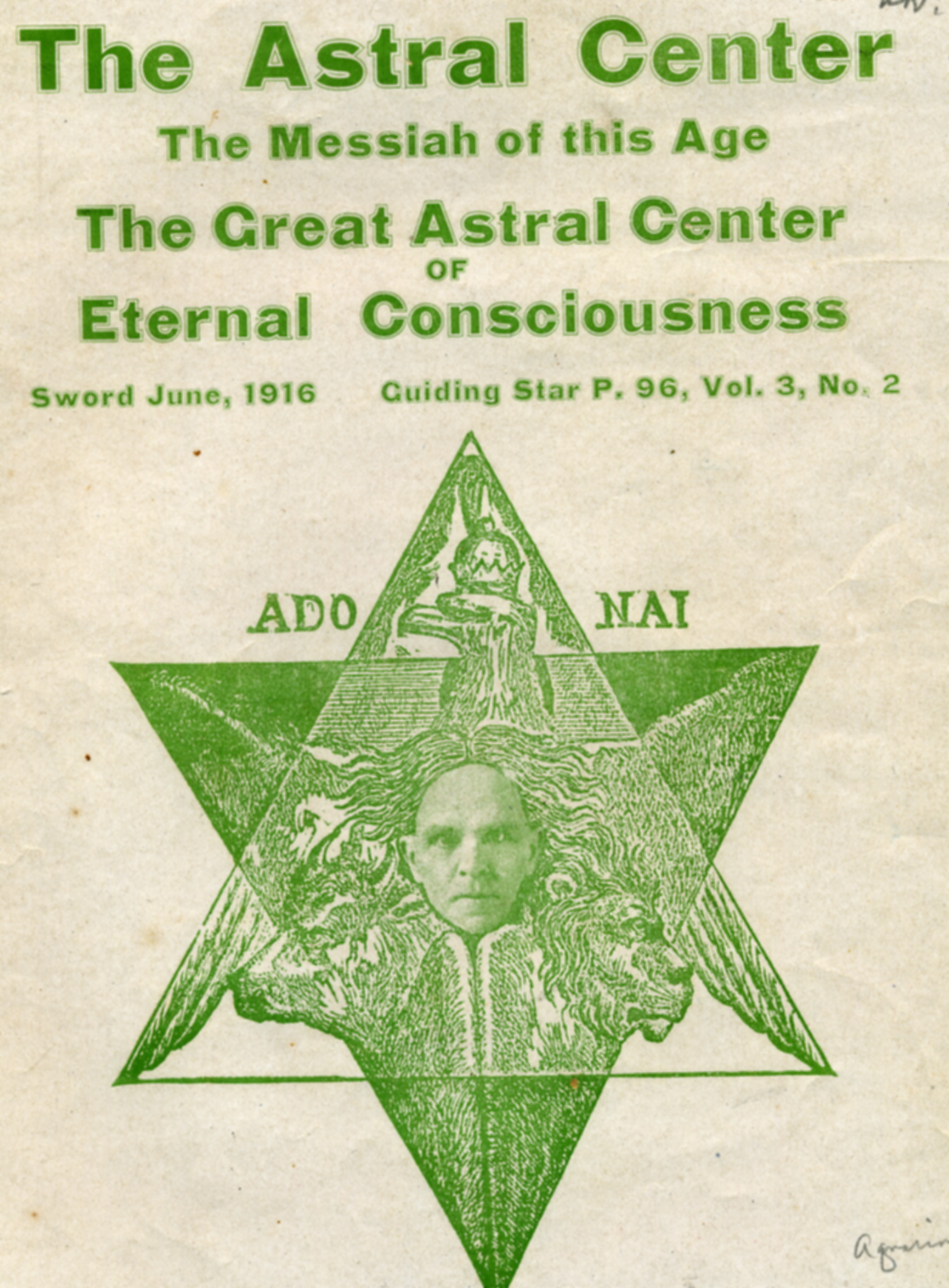
Last month we wrote about Edgar S. Peissert and his claim to be some kind of “new” Koresh. This month we want to explore a little further into the various groups that seemed to spring up after the death of Teed.

The Koreshan Age


One of the interesting things about all this is that you don’t hear about these groups in any of the Koreshan literature of the time. All this dissension has come to light only in the past couple of years, at least as far as these archives are concerned, thanks to the fact that someone kept much of the published material and it eventually found its way to us in what has become the Harry Manley Collection.

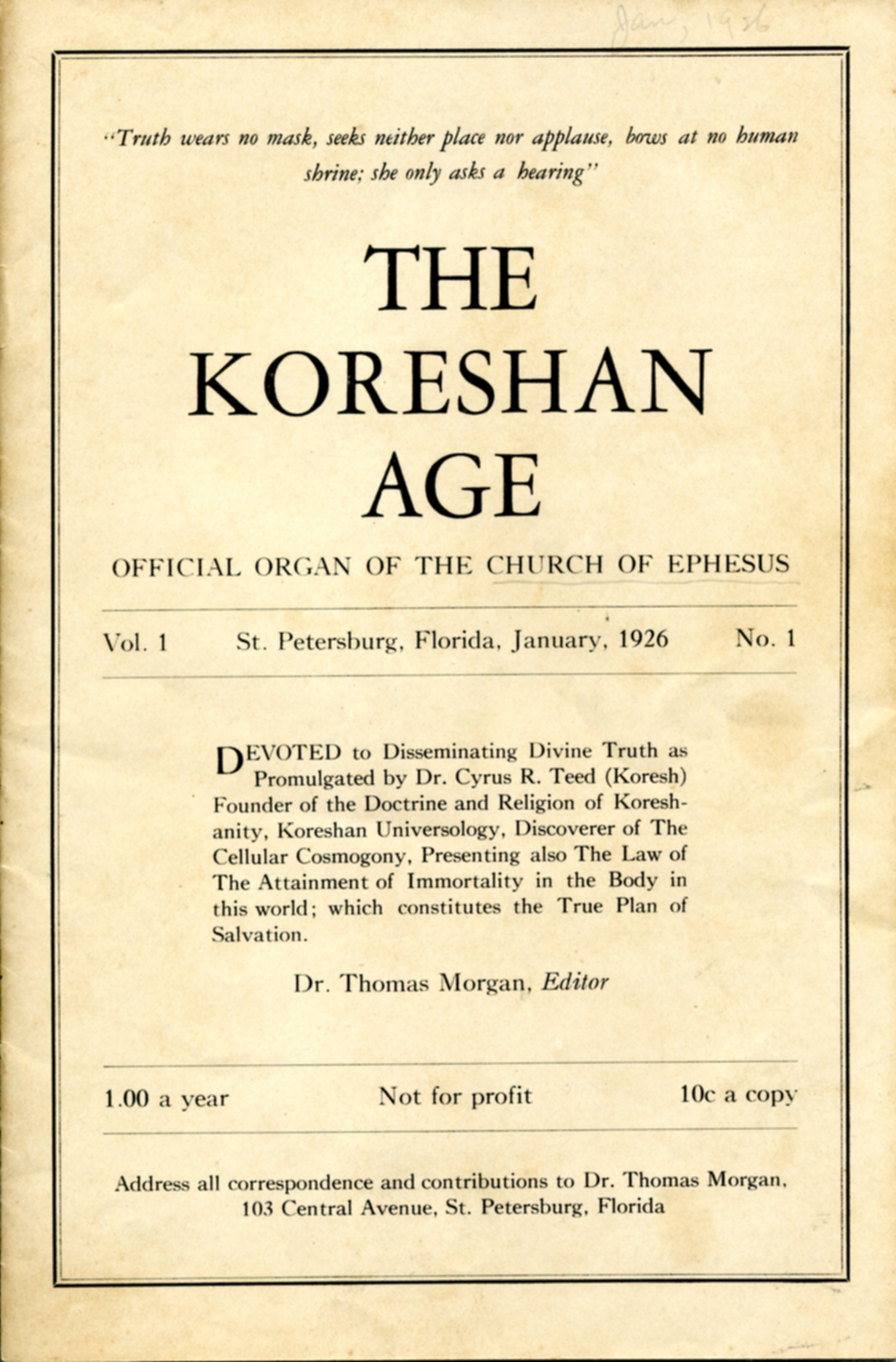
This month we turn to a group that called themselves the Church of Ephesus. Apparently this group originally followed Edgar Peissert, but somehow saw the “error of their ways” sometime around 1915. Later, (about 1919) they became devoted followers of Victoria Gratia, or Annie Ordway, who had, for any number of reasons, been drummed out of the Unity after the death of Dr. Teed. The journal, “The Koreshan Age” states very clearly that:

Knowing that some of the most important and fundamental truths of Koreshanity are overlooked, or are willfully ignored and withheld from the public; especially that which relates to the mission and function of Vitoria Gratia as the “Chosen Woman” who has been under preparation by the Almighty for generations to become the Divine Mother of the Sons of God in the very near future.

When this was published in 1926 Victoria was already dead. The article gives no name or person who was meant to replace her. Other articles contain reprints from the Flaming Sword, supporting Victoria’s claim to leadership, published before Teed or Victoria’s death.

The editor of this journal, called “The Koreshan Age” is Dr. Thomas Morgan, a name unknown before now. The papers that we have, from the Harry Manley Collection, include addresses in Saint Petersburg and Youngstown, Ohio. In a January 1915 article, entitled “Explanations”, Dr. Morgan says:

To all believers in Koresh
Greeting: Owing to my apparently unfortunate affiliation with one Edgar S. Peissert, I deem it necessary for me to give my reasons for withdrawing my support…

Finally, take a look at an article published by the Church of Ephesus. It give a little bit of a summary of their positions and beliefs. You can view that PDF article here.

Categories: Monthly Feature.

October 2012

From the Koreshan Archives:

The “Dark” Side…
The Koreshans were, for the most part, a group of dedicated and committed individuals who ,in my opinion, firmly believed in their teachings, whether it be Teed’s rising from the dead or the hollow earth. But there are always some persons or group of persons who use the honest beliefs of some to further their own agenda. After the death of Cyrus Teed and the fact that he did not rise from the dead, many Koreshans probably wondered what was next and where were they to go from here. There had to be any number of individuals who believed that they were the heirs to the throne so to speak

One of Peissert's flyers

One of those people was a man named Edgar Peissart. Peissart was born in Bethlehem Pennsylvania on January 22, 1859, apparently the child of Robert and Elemina Peisert (names and spelling from the 1870 census). Little is known of his early years, but a search found him to have been a member of Mennonite Church in Lehigh Pennsylvania. According to the “member’s list” he joined them in July 1893 and he withdrew in 1894.

He apparently joined the Koreshans at some point, although he does not appear in Claude Rahn’s membership list (File AC-0125). In the book “Folks We Knew while in the K.U.” he is listed as one of the members. Marie McCready wrote that Edgar was one of the “odd balls”. She said he came from the “House of David” sect and she believed that he went back there. He wore a beard and had long hair and he attracted a small following including John Clinchey. [for more on the House of David sect, see the: web site]

In another article, Russell Anderson wrote the “The Shaker Community in Florida”, in the July 1959 issue of the “Florida Historical Quarterly”. ((1)) In the article he writes:

Mention should be made of the relationship of the Shakers of Osceola County with another religious group, the Koreshan Unity, at Estero in Lee County, Florida. This organization had been founded there in 1894 by Dr. Cyrus R. Teed, who brought the nucleus of the group from his home in Chicago and who convinced his disciples that he was immortal. Like the Shakers, the Koreshans practiced celibacy and communal ownership of property and held a belief somewhat similar to the Shaker concept of a male-female godship, but here the resemblance ceased. The Koreshans professed a belief in reincarnation and seem to have attracted a strange lot of followers, many of whom held peculiar
beliefs regarding the form of the world, life, etc. Because of a general agreement in some fields, each community was interested in the other and there was much visiting between them. At one time, in 1908, Ezra Stewart spoke of the Koreshan movement as a “racket” but the Shakers supplied information regarding their own beliefs and in 1909 Stewart wrote that “indications are that we may, gather some of them” (i.e., receive them as members).

Interest among the Koreshans in Shakerism seemed to increase as dissension arose at Estero, yet only one of their adherents, Mary E. Daniels, joined the Shaker community. Generally the Shakers were sympathetic but cautious in regard to the Koreshans. For example, Edgar S. Peissert was furnished a copy of the Shaker novitiate covenant and given an invitation to visit. He indicated that he was in thorough accord with the covenant. Yet when he arrived he was found quite unacceptable. The point of view of the Shakers in such matters may be seen from the comment of Ezra J. Stewart who wrote in May, 1901, “As a result of an interview with the elders here … [it was thought best] that Edgar should depart [for Estero] next morning by train … as his views were found to be quite different from ours . . . He evidently hoped to set up a little kingdom here with himself as leader . [He] wears finger rings, and has much distaste for work, altho fairly strong and in good health”. ((2))

We don’t know exactly what happened to Peissert. Perhaps he went back to the “Sons of David” sect, as the McCready’s believed, but we imagine that there were some who believed in his claims, just like there were others who claimed Teed’s mantle. ((3))

  1. See AC-0167[]
  2. Ezra J. Stewart to Bro. Alonzo, May 30, 1904; October 6, 1906; September 29, October 6, 1907; April 1, October 18, November 22,1908; April 1, May 9,20,31, 1909; April 17, 1910, May 1, 1911; Dr. Charles A. Graves, Estero, Fla. to Ezra J. Stewart, September 29, 1907.[]
  3. Material on Peissert came to us via the Harry Manley collection. (AM-0180). Manley (and others) apparently kept a file on Peissert to dispute any claims he may have as to the succession of Cyrus Teed. Much of it is made up of so-called theological arguments and astrology. I won’t even attempt to get into any of those arguments since they seem to make little or no sense. The point, however, is that after Teed’s death in 1908, there were some who claimed that they were the ones who should succeed him. A core group of Koreshans held on to the reigns of power.[]

Categories: Monthly Feature.

September 2012

With the often mentioned road construction that continues, and will continue for the next year or so, I thought it appropriate to do a re-run of a post from 2007.

 —  September brings the “beginning of the end” of the hot summer season, but the early beginning of the influx of our “seasonal” visitors. That means an increase in traffic and travel (how could it get any worse?). For the Koreshans who lived in a different time, travel on roads and bridges was a different kind of adventure.
    In the “Community Current Events” column from September 1927, 75 years ago this month, Dennis Richards wrote:

Florida is building highways so rapidly it is always impossible to say from day to day what the mileage of hard-surfaced roads is. …Florida now has approximately 9,500 miles of highway over which automobiles may be driven at high speed.”

Of course, we now have about 122,000 miles of highway in Florida and “high speed in 1927 meant going about 95 mph at the Indianapolis Speedway. Of course they do that on I-75.
    Richards talked about crossing the Gandy Bridge, connecting Tampa and St. Petersburg. It was built in 1924 and shortened the distance between the two cities from 42 to 19 miles.
    Closer to home, Richards also talks about traveling over to Pine Island with Allen Andrews, Laurie Bubbett and Harry Manley. They were enjoying the ride over the new road which had been recently opened to the public. He commented that the citrus groves on Pine Island were nearly immune from frost and that they required no spraying for scale and other pests because of the action of the salt air.

    We hope to be doing another update to the online archives very soon. We’ll be adding more images of many of the documents and also full text of another year or so of the “Community Current Events” column which began appearing in the Flaming Sword in 1916 and continued until the end of the publication in 1949. The CCE column gives us valuable insight in to the daily lives of Koreshans.

Categories: Monthly Feature.

Some new features…

I’m always looking for ways to add or enhance the information presented here. Today I changed the “Genealogy” link in the “Inside Links” section in the right column of this website. It is still pretty much the same data, but it is now presented in a more compact and more precise way. Just click on the second link on the right, (2. Koreshan Genealogy), or simply Click Here.

Secondly, some of the photos in our collection, though published, don’t always get much time on the site, so here are some of the Ritter Collection, set aside for viewing. Just click on this LINK

Enjoy!!

Categories: Posting.

Tags: ,

August 2012

From the Koreshan Archives:
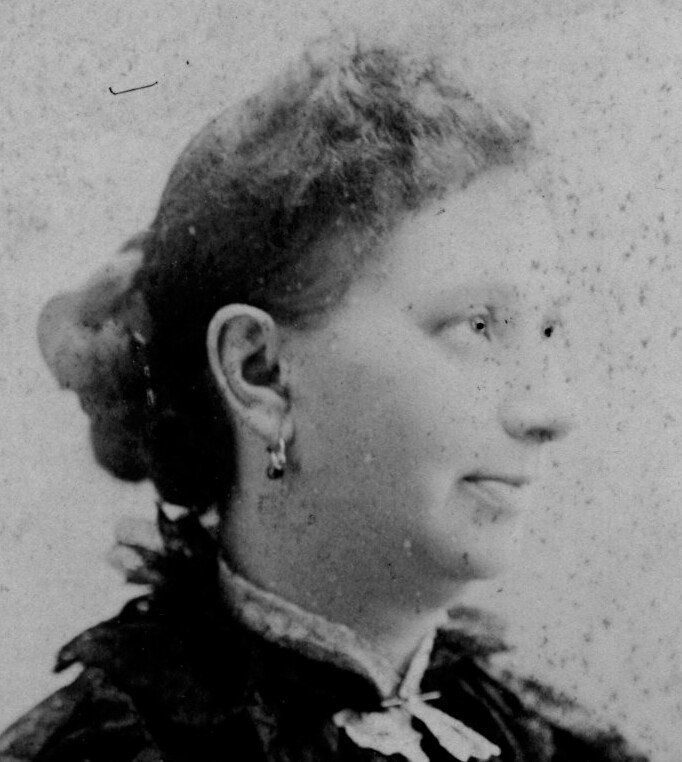
 —  This month we look closer at the background of Annie Glosson Ordway Graves. On August 29, 1909, Annie, known to Koreshans as “Victoria Gratia” , married Dr. Charles Graves, the Koreshan dentist and former Mayor of Estero. This came after the two were basically drummed out of the Unity after the death of Dr. Teed in December of the previous year (1908). For all her prominence, Annie’s history is rather vague. Here is what we know about her.

Annie Glosson Ordway Graves

·  She was born in Boston Massachusetts on April 10, 1844 to Henry and Ann Glosson.
·  Her first marriage was to David E. Ordway. Little or nothing is known of him.
·  By the time of the 1870 Census, she was living in Chicago.
·  In the 1880 Census, she is listed with her husband, David, who was listed as a baker, and two sons – Harry, age 14 and George, age 6.
·  In the 1900 Census she is now shown as a member of the Koreshan Unity, although the census says she is still married, but only shows her married for one year. This probably has something to do with the Unity since the census also shows Teed and all but one of the females as married for one year.

Exactly when Annie either left or divorced her husband is unknown, but we can only speculate that the breakup appears to have been due to the lure of Cyrus Teed and the Koreshan movement. It is also unclear as to when Teed elevated her to the rank of “Pre-Eminent”, that is to say, the female head of the Unity.

Regarding the reasons for Victoria’s departure from the Unity, it is believed that part of the reason was that she recommended Teed’s burial after her return to Estero, following his death. This obviously did not sit well with those who believed he would rise from the dead. She left the Unity and moved to Sanford, Florida to supposedly begin a new community. She eventually ended up in St. Petersburg where she died in 1923. There were some attempts by some members of the Unity to bring her back to Estero, but those efforts obviously failed.

The late Evelyn Horne wrote:

“The first celebration of the Lunar Festival was at Estero, in 1902, where Dr. Cyrus R. Teed and Victoria both attended. There were also celebrations at the Koreshan Home in Chicago. The Estero celebration was an all-day affair, starting at breakfast in the Dining Hall–a musical program at 10:30 a.m.–at 2 p.m. a boat trip on the steamer “Victoria”, down the Estero River, along with Dr. Teed and 32 members. The steamer was decorated with gala-day decorations with flags and streamers.

Here are images of the 1880 U.S. Census and the 1900 U.S. Census records. Just click on the image to open it up, then look for the Ordway family.


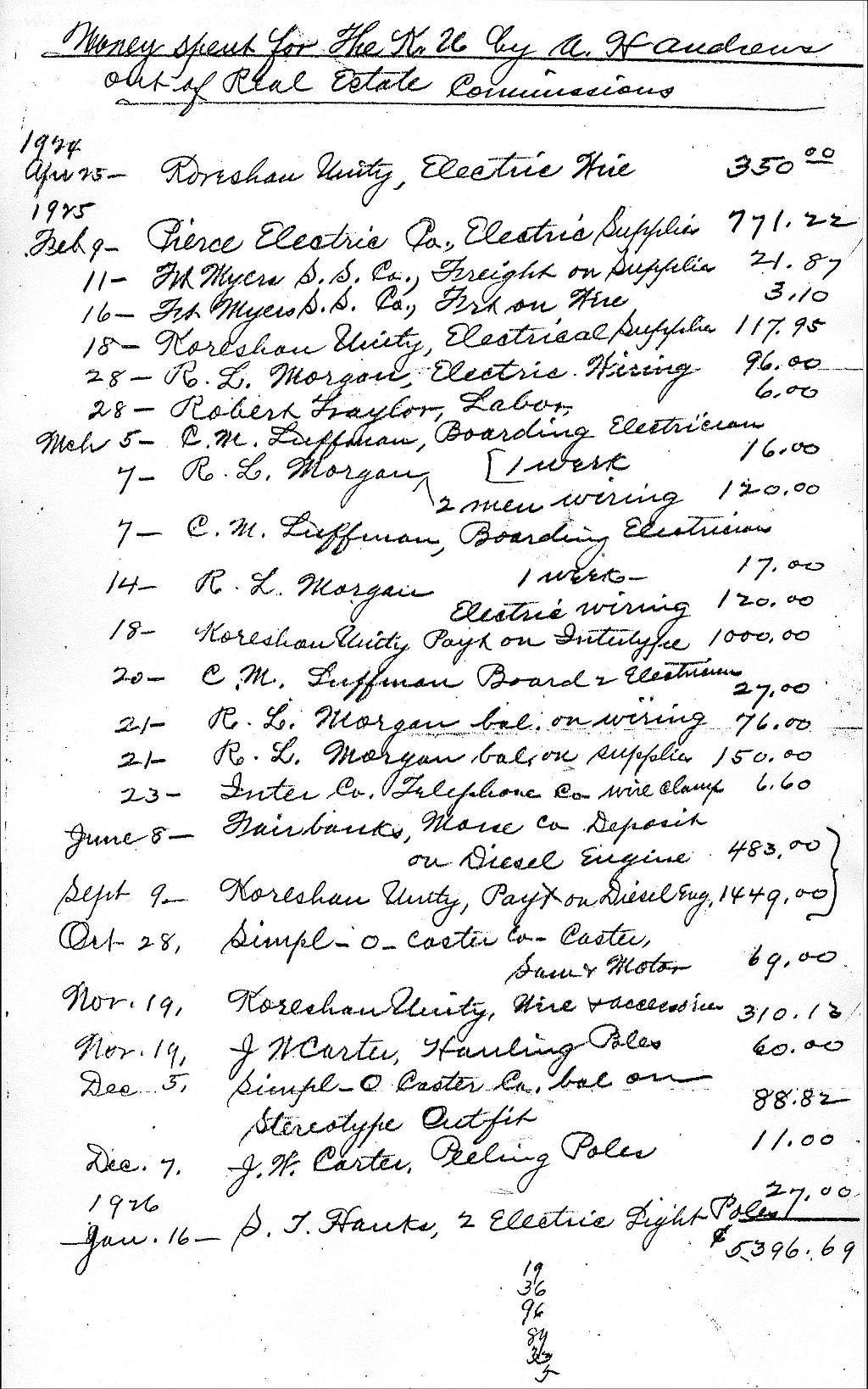
August also brings us the birthday of a very forward looking Koreshan, Alfred P. Christensen. Alfred was born in Copenhagen Denmark, on August 21, 1878. He was only four years old when he arrived in the United States in 1882. He was then naturalized in 1888. Alfred had many talents. He played the drums and the violin and he was a machinist. It was Alfred, as Koreshan director of the Mechanical Department, who ran the first power plant in Estero. Alfred was the engineer who hooked up the plant, which provided electric power for the Unity, in June 1925. Run by a Fairbanks Morse engine, Alfred worked hard to keep the power plant running until August 29, 1946 when Florida Power and Light Company brought electric power to Estero. Alfred also joined three other Koreshans, including Frank Lewis (see July) as a member of the “Trail Blazers” who crossed the State of Florida in Model-T’s to open the way for the construction of the “Tamiami Trail”, now US-41.

Alfred died at Lee Memorial Hospital on January 9, 1963 and was entered into the Koreshan Unity Cemetery, which is now part of the Pelican Landing development. They say that Alfred was a quiet person, well loved by all. He was of medium build, weighed about 150 pounds, strong in character, ruddy complexion, brown eyes, sandy hair. Very neat in his person. Always wore tan shirt and pants. Played the violin beautifully.

Categories: Monthly Feature.

Even More Maps…

Once again, Lyn Milner, in her research, has created a map of Cyrus Teed’s “New York Days”. Here is is:


View Teed’s New York Days (all dates approx) in a larger map

Categories: Posting.

Tags: , ,

July 2012

From the Koreshan Archives:

     July brings us the birthdays of two people, one of whom never became a Koreshan, as far as we know, and the other, a Koreshan, but more importantly a pioneer. Then, we take a look at a copy of the “American Eagle” from 1906.

     First, one of the brothers of Cyrus Teed (Koresh), Charles Jackson Teed. Charles was the fourth child of Jess Teed and Sarah Ann Tuttle. He was born on July 3, 1843. He married Amelia McLaughlin on February 23, 1874. It is after that date that things get a bit murky. We know that Charles and Amelia had a daughter, Ella, who was born on May 6, 1875. We also know, (thanks to original archival papers), that he died somewhere around 1887. Charles was listed in the 1880 census along with Amelia and a daughter Sarah, age 3. No sign of the child, Ella. By the time of the 1900 census, we find an Amelia Teed in a State Hospital. Then by 1910, it shows her with another son, Marvin, born about 1886. Teeds were plentiful in New York, so there may some others whose names are similar. So we have a great deal of death and suffering in the family. The death of children and husbands may have taken its toll.

Frank Lewis from the Ritter Collection

On a brighter note, July 3 is also the birthday of Frank S. Lewis, born in 1869 in Port Dickinson, New York. Frank was a telegrapher who worked for the Lehigh Valley Railroad as well as for Western Union. Frank came to Florida in 1922 and in 1923 he was part of the “Trail Blazers”, the group who drove across the Everglades from Fort Myers to Miami, opening the way for the eventual building of the road, now known as the “Tamiami Trail”. It is unclear whether Frank was, himslef, a Koreshan. Certainly his wife, Anna Welton Lewis was. She was born near Moravia New York and she and her mother lived in the commune there. Frank and Anna moved to Estero in 1943, having lived in the Everglades since Frank worked for the Barron Collier company as a telegrapher. In Estero, their small cottage became known later as the “Anna Lewis House” since she continued to live there after Frank’s death in 1945. That house is now on the State Historic Site’s property and is used as the administrative offices.

Frank was the only member of the Trail Blazers who kept a diary. The original is located int he Richter Library, University of Miami, in Coral Gables. It was digitized by the Florida Center for Library Automation and it can be viewed on our site by Clicking Here

This was written in the FLAMING SWORD, Community Current Events by Adah Price, January 1946:

“Brother Frank S. Lewis died at Lee Memorial Hospital, Ft. Myers, Friday, Dec. 7. The deceased was born in Port Dickinson, a suburb of Binghamton, N. Y., July 3, 1869. He became a telegrapher by profession, serving first with the Lehigh Valley Railroad, and several years later with the Western Union Telegraph Co. in New York City with whom he remained until coming to Florida in 1922. In 1923 he participated in the now historic Tamiami Trail Blazing trip with a party of men who took the first cars across from Ft. Myers to Miami before the Trail was completed. Shortly thereafter he became associated with the Barron Collier organization at Everglades, serving as telegrapher and accountant in the general offices until he retired and moved to Estero in December 1943. He was also secretary of the Tamiami Trail Masonic Lodge in Everglades. For nearly two years past he had served as bookkeeper and treasurer of The Koreshan Unity at Estero. He left no immediate family, other than his widow, Mrs. Anna Lewis. Mr. Lewis was a man of genial and kindly disposition whom to know was but to admire, and leaves a host of friends to mourn his loss. Burial was in Estero.”

     Finally, as we mentioned in the June posting, the State Archives have finally received grant funding to process the Koreshan Archives, donated to the State by the “College of Life Foundation“, previously known as the Koreshan Unity. The Archives here at the State Historic Site are a small portion of what is now in Tallahassee. Our holdings are items that were donated specifically to the Park. The Unity holdings were the property of the Unity and were the “official” archives of the Koreshans. We mentioned that the Florida State Archives also prooduced a ‘blog’ which has included postings describing the process that the Koreshan holdings are going through. They just posted Part-3 which includes a page from the May 6, 1908 issue of the American Eagle Supplement in which Dr. Teed and other members of the Unity give their side of the altercation that saw Dr. Teed arrested.

Categories: Monthly Feature.

Tags: , ,

More Maps

As I mentioned in the June monthly post, I was re-publishing an entry from 2009 in which I featured a Google Map showing some of the Koreshan locations in present day Chicago. Lyn Millner, a friend of the archives, FGCU professor, who has begun work on a book about the Koreshans, contacted me with a more up-to-date map. So, we publish that here. Thanks Lyn, for all your hard work!


View Koreshans in a larger map

For the complete map, click on this link

Categories: Posting.